Leaf-Based Paper: Reimagining Waste as Material
- Ella Weinstein
- Nov 1, 2021
- 3 min read

Designed by Bella Boak Weinstein and Julia Olney

Problem:
In this project, I set out to answer a simple question: what if fallen leaves could be more than just seasonal debris? Each autumn, cities collect tons of leaves, usually destined for compost or landfill. Yet these leaves carry natural fibers that, with the right process, can be transformed into paper.
Through experimentation, I developed sheets of leaf-based paper, a biomaterial that is both biodegradable and renewable, offering an alternative to tree-pulp paper. The process involved grinding, pulping, and binding fallen leaves into a material with surprising strength and texture. Each sheet holds the color and imprint of the season, making the material feel alive, tied to cycles of nature.
Beyond material exploration, this project asks us to rethink what counts as “waste.” Leaves, often overlooked, can become a platform for design and storytelling—whether for packaging, art, or everyday products. By spotlighting this overlooked resource, Leaf-Based Paper reflects my ongoing commitment to sustainable design, circular systems, and human-nature connection.
Research Question:
What if fallen leaves could be more than just seasonal debris?
Materials:
Dead leaves
Scrap paper
Storage Tub
Blender
Water
Mold and Deckle
Sponge
Towel
Strainer
Experimentation:
100% Leaves: Brittle Unsuccessful

50% Leaves, 50% Repurposed Paper: Thin and Flexible, Successful

50% Leaves, 50% Repurposed Paper: Thin and Rigid, Successful
Created Leaf Based Chipboard 1/8 inch

Process:
1: Collect fallen leaves
Be sure to store the leaves in an airtight container as leaves can have bugs. When ready to use, de-stemming the leave sill lead to a smoother texture.

2. Wash & Blend Leaves
Rinse the leaves thoroughly to remove dirt and debris. Place them in a blender with a small amount of water and blend until a fibrous pulp forms. The smoother the blend, the more even the final paper texture.
3. Tear & Blend Paper
Use scrap paper or old paper bags as a binder. Tear into small pieces and blend with water until it becomes a pulp. This step helps strengthen the leaf fibers and creates a more durable sheet.
4. Mix Pulp & Leaves
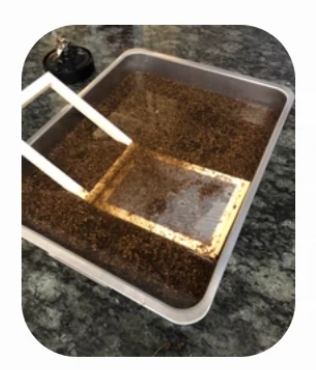
Combine the paper pulp with the blended leaves in your desired ratio, then blend again until well mixed. The ratio determines the final sheet’s texture and strength—more leaves result in a rougher, more organic finish, while more paper pulp creates smoother, sturdier sheets. Store the mixture in a tub until ready to use.
5. Form the Sheets
Using a mold and deckle, dip into the mixture with the hinges open, allowing pulp to settle across the screen. Lift and let the water drain. Close the deckle, then gently press with a dry sponge to remove excess water. This step forms the base sheet that will be dried into leaf-based paper.


Outcome:
The experiments resulted in a collection of handmade paper sheets, each one carrying the subtle imprint of its origins. Unlike conventional pulp paper, the material retained earthy tones, flecks of leaf matter, and a natural texture that felt both familiar and entirely new. The sheets proved surprisingly strong once dried and pressed, flexible enough for sketching or folding, yet visually distinct enough to stand on their own as a design object.
What emerged was more than just paper—it was proof of concept. Leaf-based paper demonstrates how overlooked organic waste can be transformed into something functional and beautiful. Beyond its immediate material qualities, the project highlights a pathway toward rethinking urban waste streams, positioning leaves not as seasonal debris but as a renewable design resource.
Future Potential:
Leaf-based paper opens the door to new applications that merge sustainability with design. Its natural texture and seasonal variation make it an ideal material for limited-edition packaging, stationery, or art prints—objects where uniqueness and story add value. At scale, the process could help cities repurpose the massive volumes of leaves they already collect each autumn, transforming a disposal challenge into a renewable resource.
Beyond its practical uses, the project serves as a model for circular design thinking: looking at overlooked waste streams and asking how they might be reintegrated into daily life. With further refinement—such as improving durability or experimenting with natural binders—leaf-based paper has the potential to become both a material for makers and a conversation starter on how design can reframe waste as possibility.


Comments